Doctors warn about the sleep they fear most: Your brain shutting down without you knowing |
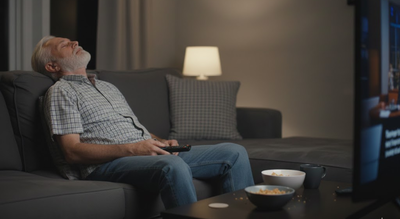
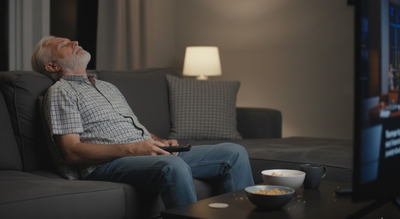
People often imagine danger creeping in when they stay awake too long, the nodding head, the heavy eyes, the drift into sleep they try to fight off. What they don’t expect is a version of sleep that arrives without warning, sometimes without their eyes even closing. Doctors call it microsleep: a brief involuntary shutdown of the brain lasting from a single second to about 30.Most people don’t realise it’s happened until they jolt awake, re-read the same sentence, or drift across a lane while driving. Sometimes it’s even stranger, you blink, and in that split second there’s a whole dream, a scene, a story arc that plays out as if you slipped into a parallel universe and returned in the space of a blink.
What microsleep actually is
Microsleep is generally defined as a short, uncontrolled episode in which the brain slips into sleep-like activity while a person is still nominally awake. Several sleep laboratories describe it as lasting roughly 1–30 seconds, causing temporary loss of attention, memory lapses and dramatically slowed reaction time. People often experience it as head-drooping, zoning out, sudden muscle jerks, or a momentary lapse in awareness.Researchers widely attribute the primary cause to severe sleep deprivation; the brain simply forces itself offline when it can no longer gradually maintain wakefulness. Monotonous or repetitive tasks, such as long-distance driving, late-night television or night-shift monitoring, can subtly trigger it, especially when a person is already tired. Circadian rhythms also play a role, making microsleep more likely during brief natural dips in alertness, such as late at night or in the early hours of the morning, when notably low energy levels can lead to unexpected lapses.
A doctor who sees it up close
One of the clearest public explanations of microsleep has come from Dr Myro Figura, a board-certified anaesthesiologist, medical school educator and physician entrepreneur based in Los Angeles. Dr Figura works as an Attending Physician and Assistant Clinical Professor in the Department of Anesthesiology and Perioperative Medicine at UCLA Health, and has more than a decade of experience teaching medical students and mentoring residents. He is also the co-founder and Chief Marketing Officer of HealFast, a company that makes products for surgery recovery. In a widely circulated video, Dr Figura calls microsleep “wild and scary,” explaining: “Micro sleep is wild and scary because it is your brain involuntarily blacking out for a fraction of a second up to 30 seconds. Your eyes might stay open, but your brain is not processing anything. It’s a complete reboot that happens after you don’t sleep for about 24 hours.” He notes that it’s estimated to be responsible for around 100,000 car crashes every year, adding that healthcare workers, including himself, are particularly vulnerable because they often work 24-hour on-call shifts.
Why doctors compare it to being drunk
In the same video, Dr Figura warns that after 24 hours without sleep, cognitive impairment can resemble intoxication: “And the really shocking fact is, in addition to micro sleep, after 24 hours of sleep deprivation, you are as impaired as a drunk driver. That’s right. Not sleeping for 24 hours is equivalent to having blood alcohol level equivalent to driving drunk.” For anaesthesiologists and other emergency specialists, this carries a very specific implication. “And imagine having to do surgery in this kind of state on an emergency in the middle of the night? That’s what healthcare workers have to do,” he adds.
How people try to prevent microsleep
A number of sleep clinics and road-safety organisations publish guidelines aimed at reducing microsleep risk, particularly while driving. These include practical measures such as:
- taking a break every two hours,
- napping safely for 5–45 minutes when needed,
- switching drivers when travelling with others,
- avoiding alcohol before driving,
- avoiding medications known to cause drowsiness (such as some antihistamines, painkillers and antidepressants),
- and driving during daylight when possible.
These recommendations do not eliminate microsleep, but they are widely circulated as risk-reduction strategies. Some clinics also issue broader sleep-hygiene advice as behavioural recommendations intended to promote more consistent rest. These may include aiming for 7–8 hours of nightly sleep, keeping a regular sleep–wake schedule, reducing caffeine after 4 p.m., and using warmer, low-intensity lighting in bedrooms. Other common guidance includes bedroom temperature suggestions (often 25–26°C), avoiding screens late at night, and maintaining a consistent bedtime.
What happens when people ignore it
Doctors and road-safety agencies warn that microsleep often occurs precisely when someone believes they can “push through” their tiredness. Several sleep specialists note that people routinely overestimate their ability to stay awake, especially during monotonous activities or long stretches of night driving. The risk isn’t the drowsiness itself, it’s the momentary blackout that follows, during which the brain simply stops processing incoming information. Even a few seconds of lost awareness can be catastrophic at motorway speeds.
Circadian Routines and Sleep Disorders
Many sleep centres describe circadian rhythm disruption as another contributor. Going to sleep late and waking up late can disrupt hormonal patterns and reduce sleep quality. Delayed Sleep Phase Syndrome, a disorder where a person’s internal clock runs much later than the external day–night cycle, can make consistent rest difficult and increase the likelihood of insufficient sleep.
A danger you don’t feel coming
Microsleep is unnerving precisely because it often announces itself with nothing more than a blink, or nothing at all. The person experiencing it might not realise they’ve been “offline” until a sentence suddenly stops making sense or the car drifts toward a rumble strip. As Dr Figura puts it, the danger lies in the invisibility: the brain “not processing anything” while the body remains upright, eyes open, performing a task it can no longer truly control. For most people, the safest protection is simply adequate sleep, and the acknowledgment that the body has limits it can’t negotiate with.